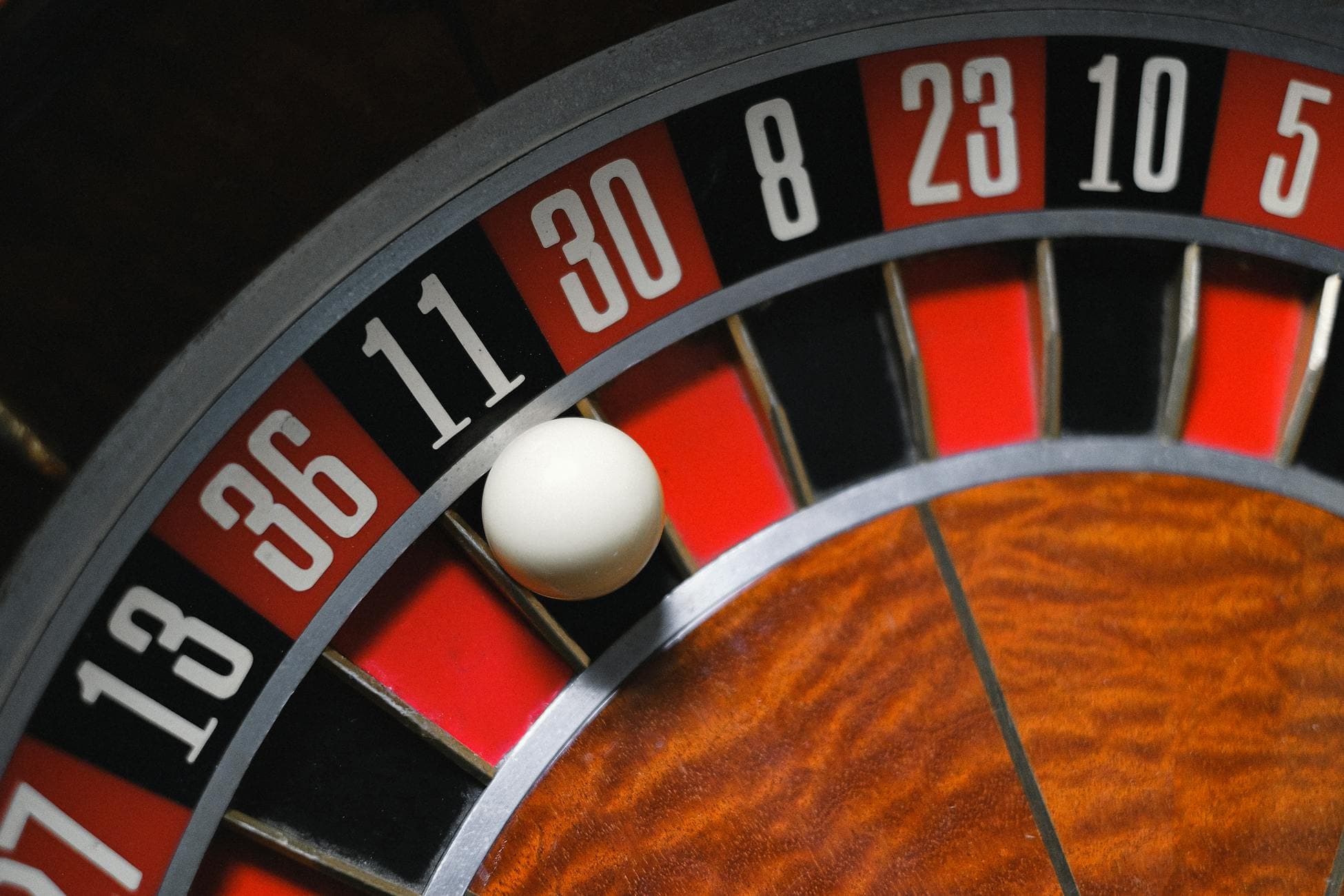
What Is Stake Plinko?
Stake Plinko is a Stake Originals game built around a simple idea: you place a bet, drop a ball, and wait to see which multiplier slot it lands in. The visible motion is easy to follow, which is one reason the game feels intuitive fast. But the simplicity can also hide the important part: Plinko is still a chance-based game, and the settings you choose change volatility rather than certainty.
For the broader game page, see our Stake Plinko guide.
If you are searching for “stake plinko what is,” the short answer is this: it is a ball-drop game with multipliers, not a skill game with a readable pattern. You can make decisions before the drop, but once the ball leaves the top, the result is outside your control.
What Actually Happens in a Round
A Stake Plinko round follows a straightforward sequence.
- You choose a bet amount.
- You select the risk level, and in the game modes that offer it, the row count.
- You start the drop.
- The ball travels downward through a peg board, bouncing left and right in a path you cannot map in advance.
- It lands in one multiplier slot at the bottom.
- The round settles automatically based on that slot.
That is the basic anatomy of the game. The key point is that the board does not give you a way to steer the ball once it is falling. The visual bounce can make the round feel like it is “almost” readable, but the on-screen motion is not a hidden signal system.
What You Control, and What You Do Not
Stake Originals Plinko gives you a few meaningful decisions before each round, but those decisions have limits.
What you can control
- Bet size: how much you are staking on each drop.
- Risk setting: a volatility choice that changes the shape of the multiplier spread.
- Rows: where available, this changes how many peg layers the ball passes through.
- Play style: manual drops or automated play, depending on the interface.
- Session limits: the budget and time boundaries you set for yourself.
What you cannot control
- The ball’s exact path through the pegs.
- Which multiplier slot the ball will hit on a given round.
- Whether the next drop will be better or worse than the last one.
- Any “due” result after a run of low outcomes.
That distinction matters. A lot of beginner confusion comes from mixing up controllable settings with actual outcome control. You can shape exposure, but you cannot steer randomness.
Risk Settings and Volatility
When players ask what “risk” means in Stake Plinko, they usually want the practical answer: what changes when I switch from low to high?
The simplest way to think about it is this:
- Low risk tends to produce more consistent, smaller outcomes.
- Medium risk sits in the middle, with a broader spread.
- High risk makes rare large outcomes more visible, but also increases the frequency of weaker results.
That does not mean high risk is “better” or “worse” in a moral sense. It means the game behaves differently. With higher risk, the ride can feel more dramatic because the distribution is less forgiving. A single round can look exciting, but the longer you play, the variance becomes more obvious.
The same logic applies to rows. More rows usually mean more bounces and a different spread of possible landing spots. Fewer rows simplify the path. Either way, the final result is still random.
This is where a serious beginner explanation should state plainly that Plinko’s visible motion can create a false sense of control. You are watching the ball fall, but watching it does not reveal the result early or let you predict the landing.
Example: Same Bet, Different Outcomes
Here are three illustrative outcomes for the same hypothetical bet. These are examples only, not predictions.
- Low-multiplier outcome: the ball lands in a small payout zone, returning less excitement than the player hoped for.
- Near-breakeven outcome: the ball lands in a middle slot that roughly offsets the stake or lands close to it, depending on the board.
- Rare high-multiplier outcome: the ball reaches an outer slot with a larger payout, but the odds of that outcome are much lower on high-risk settings.
This is the reason Plinko can feel smooth in one session and volatile in the next without warning. The game does not need to “look” intense to be risky. Even a simple series of drops can create meaningful bankroll swings if the stake is too large for the session.
Strategy Myths People Still Believe
Stake Plinko attracts a lot of confident theories. Most of them collapse under basic probability.
Myth 1: You can read the ball path
The pegs create a visual pattern, but the path is not a reliable signal. Two drops that look similar at the top can finish in completely different slots.
Myth 2: A high multiplier is “due” after several misses
A run of low outcomes does not make a big one more likely on the next drop. Random events do not owe you balance.
Myth 3: Chasing a missed outcome is a strategy
If you increase stakes or stay longer because you want to recover a previous result, that is not a system. It is usually a bankroll risk decision with worse upside than it feels in the moment.
Myth 4: Higher risk can overcome the house edge
Higher risk changes the shape of outcomes, not the underlying fact that the game is designed with an edge. More swing does not mean more certainty.
How Stake Plinko Compares With Other Stake Originals
Stake Plinko is easiest to understand when you compare its decision point with other Stake Originals.
- In Crash, the big decision is when to cash out before the curve ends.
- In Dice, you set a probability target and see whether the roll lands inside it.
- In Mines, each reveal is a choice about whether to stop or continue.
- In Plinko, the decision is made before the ball falls, and then you wait for the landing slot.
That difference matters because Plinko gives you the most visible motion but the least mid-round control. Crash asks you to act in time. Dice asks you to choose a probability level. Mines asks you to decide how far to go. Plinko asks you to accept the board once the drop starts.
Session Controls Before You Play
If you are trying Plinko for the first time, the best decision is not about “winning” the board. It is about controlling your session.
Use this checklist before you start:
- Set a fixed budget you are comfortable losing.
- Decide how long the session will last.
- Choose a stop-loss before the first drop.
- Decide in advance whether you will use manual or automated play.
- Avoid increasing stakes after a loss streak.
- Stop if the game stops feeling entertaining.
A good session plan gives you an exit point. Without one, the game can become a sequence of reactive choices, and reactive play usually makes risk feel smaller than it is.
What Beginners Should Understand First
If you only remember three things about Stake Plinko, make them these:
- It is a chance-based Stake Originals drop game.
- Risk and rows change volatility, not predictability.
- The smartest first decision is to set a limit before you play.
That is the real value of understanding the game properly. Not because it creates an edge, but because it helps you avoid confusing motion with control.
FAQ
Is Stake Plinko random?
Yes. The round outcome is determined by randomness, not by the visible bounce path or previous drops.
What does risk mean in Stake Plinko?
Risk changes the distribution of outcomes. Lower risk usually means steadier, smaller results; higher risk usually means larger swings and rarer big multipliers.
Can you predict Stake Plinko?
No. You can choose settings before the round, but you cannot predict where a specific ball will land.
Is high risk better?
Not automatically. High risk can create bigger swings and rarer large outcomes, but it also increases the chance of weaker results.
What should beginners understand first?
Start with the basics: bet size, risk level, rows, and your session budget. Then treat every drop as an independent random event.
Bottom Line
Stake Plinko is one of the most readable Stake Originals games, which is why it is easy to underestimate. The round is simple to follow: choose a bet, set the board, drop the ball, and wait for the multiplier slot. But simplicity does not mean control. The settings change volatility, not certainty, and the best beginner decision is to define your limits before you ever press play.